Where Should You Install a Storm Shelter on Your Property? What Missouri Homeowners Should Know Before Installation
The best place to install a storm shelter on your property is a location your household can reach quickly during severe weather that also meets the shelter's installation requirements. A convenient spot isn't necessarily suitable. Drainage, groundwater, soil conditions, underground utilities, and septic-system components can all affect where a concrete storm shelter can be installed.
For Southern Missouri homeowners, especially those with rural properties, evaluating these conditions before choosing a location can help avoid installation problems and unnecessary site work.
How Close Should a Storm Shelter Be to Your House?
A storm shelter should be close enough that household members can reach it safely before dangerous weather arrives. However, there isn't one universal distance that works for every property.
Consider the actual route people would take. Would they need to cross uneven ground, navigate steps, or walk through an area that becomes muddy after rain? Could someone with limited mobility reach and enter the shelter?
The location and orientation of the entrance also matter. Nearby structures, trees, or other obstacles could interfere with access, particularly if storm debris blocks the door.
For example, suppose the area beside your house offers the shortest route, but a septic line and underground utilities run through that section of the yard. A more open location might be easier to excavate, but it could require a longer walk during severe weather.
Neither location should be selected based on convenience alone.
Remember that traveling outside during a tornado warning can be dangerous. Your household needs a realistic plan for reaching an outdoor shelter before conditions become hazardous, along with an appropriate indoor sheltering option if there isn't enough time.
What Makes a Yard Suitable for Storm Shelter Installation?
A suitable location must accommodate the shelter, its installation process, and the conditions surrounding it.
| Property Condition | Why It Matters |
|---|---|
| Close to the house | Improves access but may involve foundations or buried utilities |
| Low-lying or wet yard | Raises drainage, groundwater, or flood concerns |
| Sloped or rocky terrain | May complicate excavation and site preparation |
| Existing septic system | Requires identifying buried components and protecting maintenance access |
| Narrow side yard | May limit equipment access and working space |
| Utility easement | May restrict where a shelter can be installed |
Drainage, Groundwater, and Flood Exposure
These conditions are related but aren't the same.
Surface drainage involves rainwater collecting or flowing across the proposed installation area. A yard that regularly holds water after storms deserves closer evaluation.
Groundwater exists below the surface and may affect excavation or the suitability of an underground shelter, even when the yard looks dry.
Flood exposure involves potential inundation from rivers, streams, or other flood hazards. A location that appears suitable during ordinary rainfall may still be exposed to flooding.
Drainage improvements do not automatically make a flood-prone location appropriate for an underground shelter.
FEMA's Taking Shelter from the Storm (P-320) provides guidance on residential safe-room planning, including flood-related considerations.
Soil, Slopes, and Rock
Rocky soil, shallow bedrock, or steep terrain can make excavation more involved. Some locations may require additional site preparation, while others may not be practical for the proposed shelter.
A yard that looks level doesn't necessarily have suitable conditions below ground.
Moore Septic Services provides excavation and land clearing services, which can be relevant when preparing a property for installation.
Equipment Access and Working Space
The shelter's dimensions aren't the only space requirements.
Installation may involve excavation equipment, room to handle and position the precast structure, and access for completing site work.
Fences, narrow gates, retaining walls, steep driveways, or established landscaping can affect whether equipment can reach the proposed location.
Can You Install a Storm Shelter Near a Septic System?
Possibly, but the septic system's layout needs to be understood before choosing a location or beginning excavation.
On rural properties around Lebanon, Mountain Grove, and other Southern Missouri communities, underground wastewater components may extend well beyond the visible septic tank.
Three areas deserve particular attention:
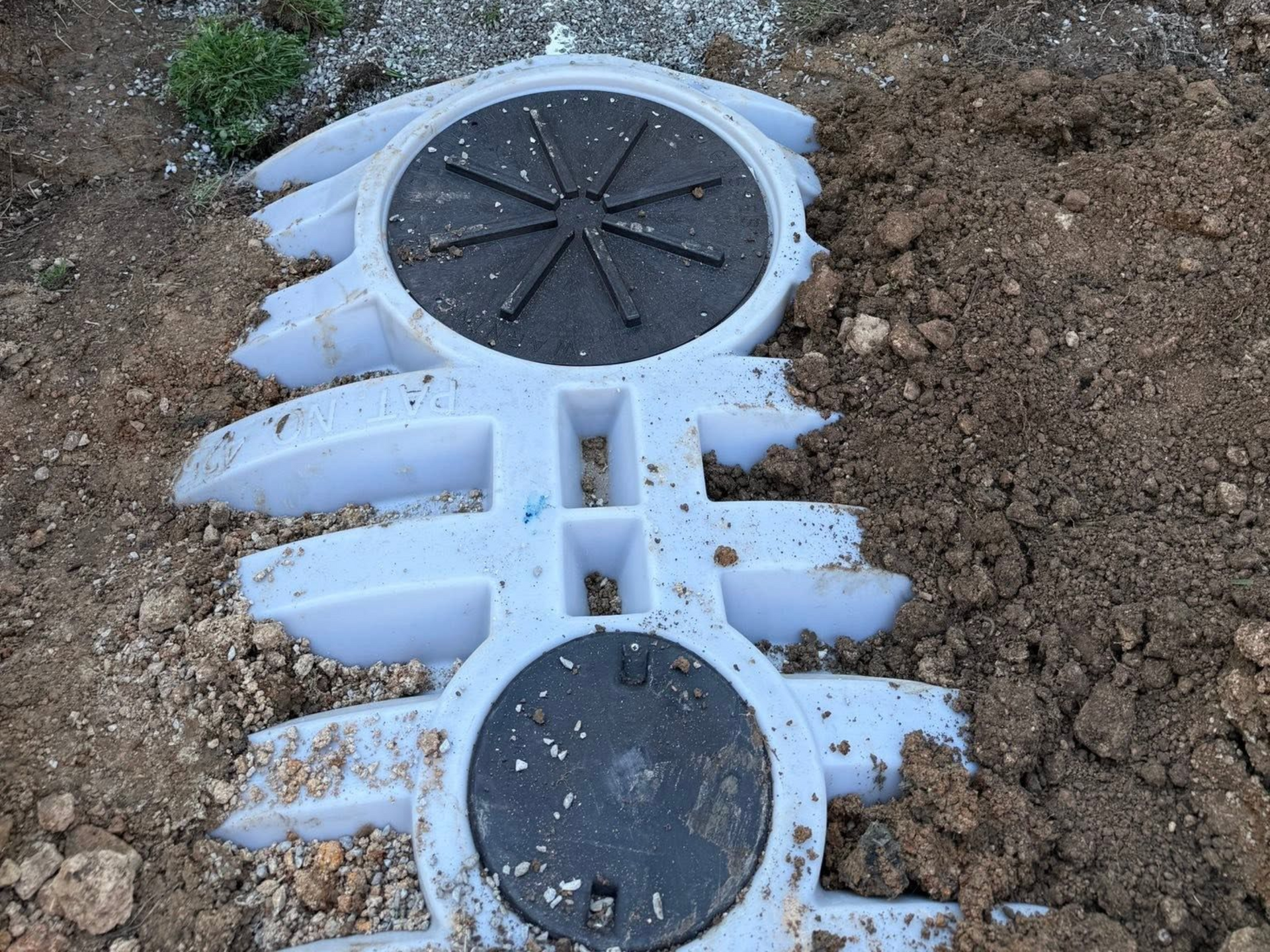
- Septic tank: Excavation and installation equipment must not damage the tank or obstruct access needed for pumping and maintenance.
- Drainfield: Excavation, grading changes, and heavy equipment can damage drainfield components or compact the soil involved in wastewater treatment.
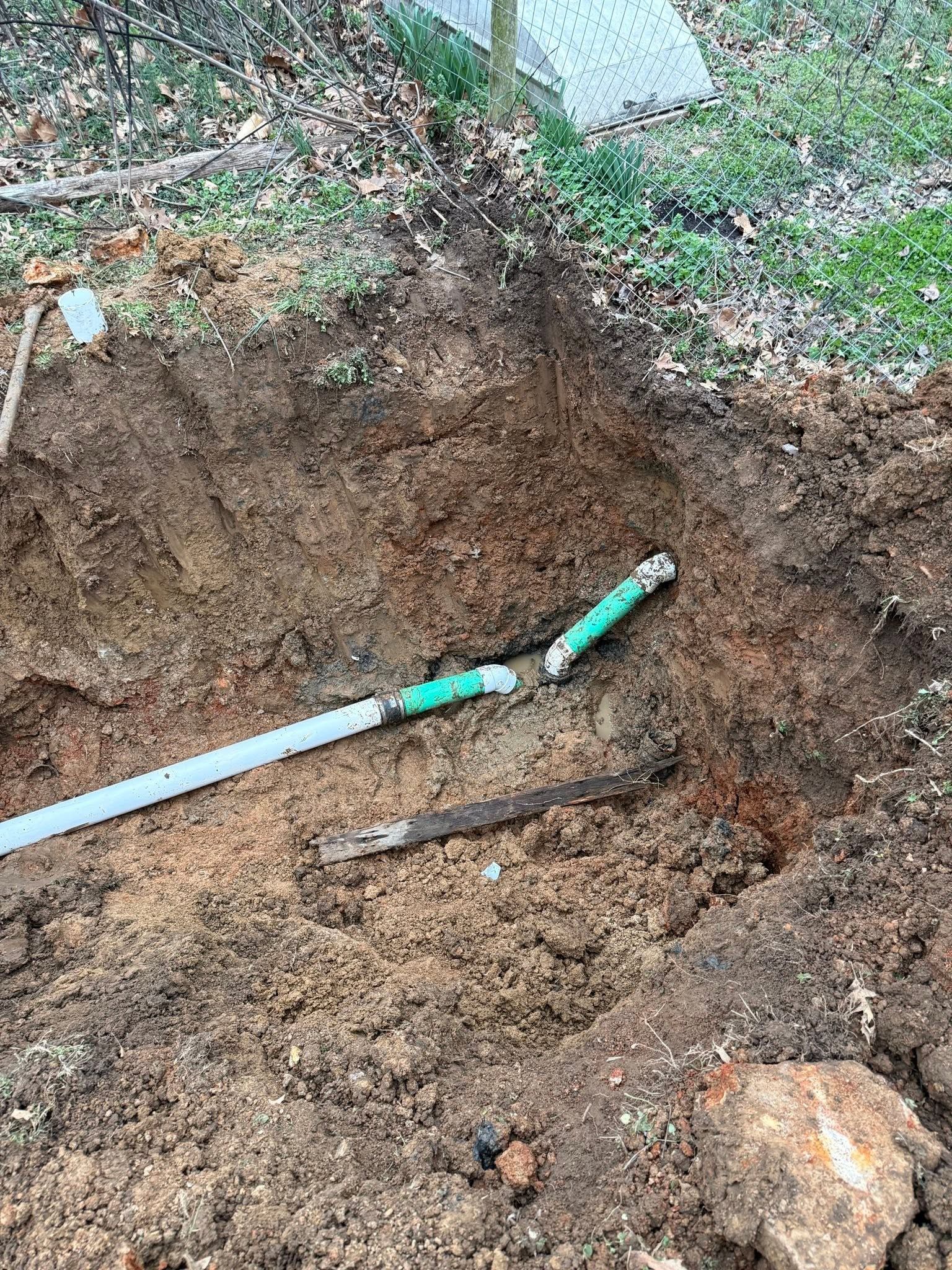
- Connecting pipes: Buried sewer and septic lines may cross an otherwise open section of the yard.
Even an unused septic system shouldn't be assumed safe to build over without evaluating its condition and status.
If you have septic-system drawings or installation records, those can help identify potential conflicts. Additional locating may be necessary when the system's layout is uncertain.
For related guidance, read our article about building, driving, or planting over a septic system.
There isn't one universal storm shelter-to-septic-system setback that applies to every property. The installation must account for the existing wastewater system and applicable site requirements.
What About Underground Utilities, Easements, and Permits?
Before excavation, underground utilities must be identified.
Missouri 811 provides a way to request utility markings before digging. However, these markings don't necessarily identify privately owned infrastructure.
Private septic lines, electrical connections to outbuildings, irrigation systems, and other buried components may require separate locating.
Utility easements can also restrict where structures are placed.
Storm shelter permit requirements vary by jurisdiction in Missouri. Depending on the property, local building codes, zoning rules, or other approvals may apply. Confirm the requirements with the appropriate building authority before installation.
FEMA guidance and ICC 500 provide important storm shelter design considerations, but FEMA does not approve or certify individual shelter products or contractors. The specific shelter's documentation and installation requirements should guide the project.
Underground vs. Partially Submerged Storm Shelters
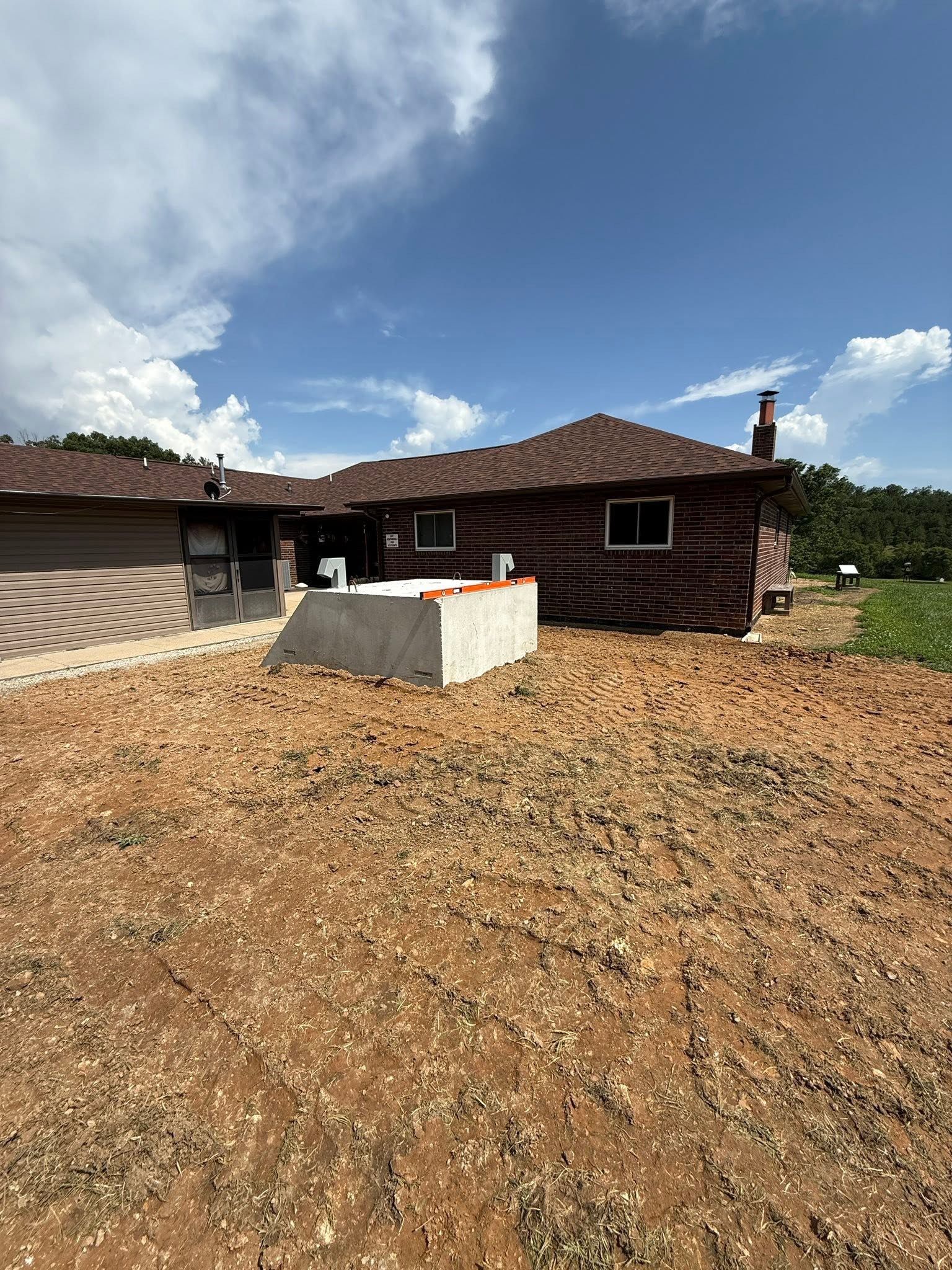
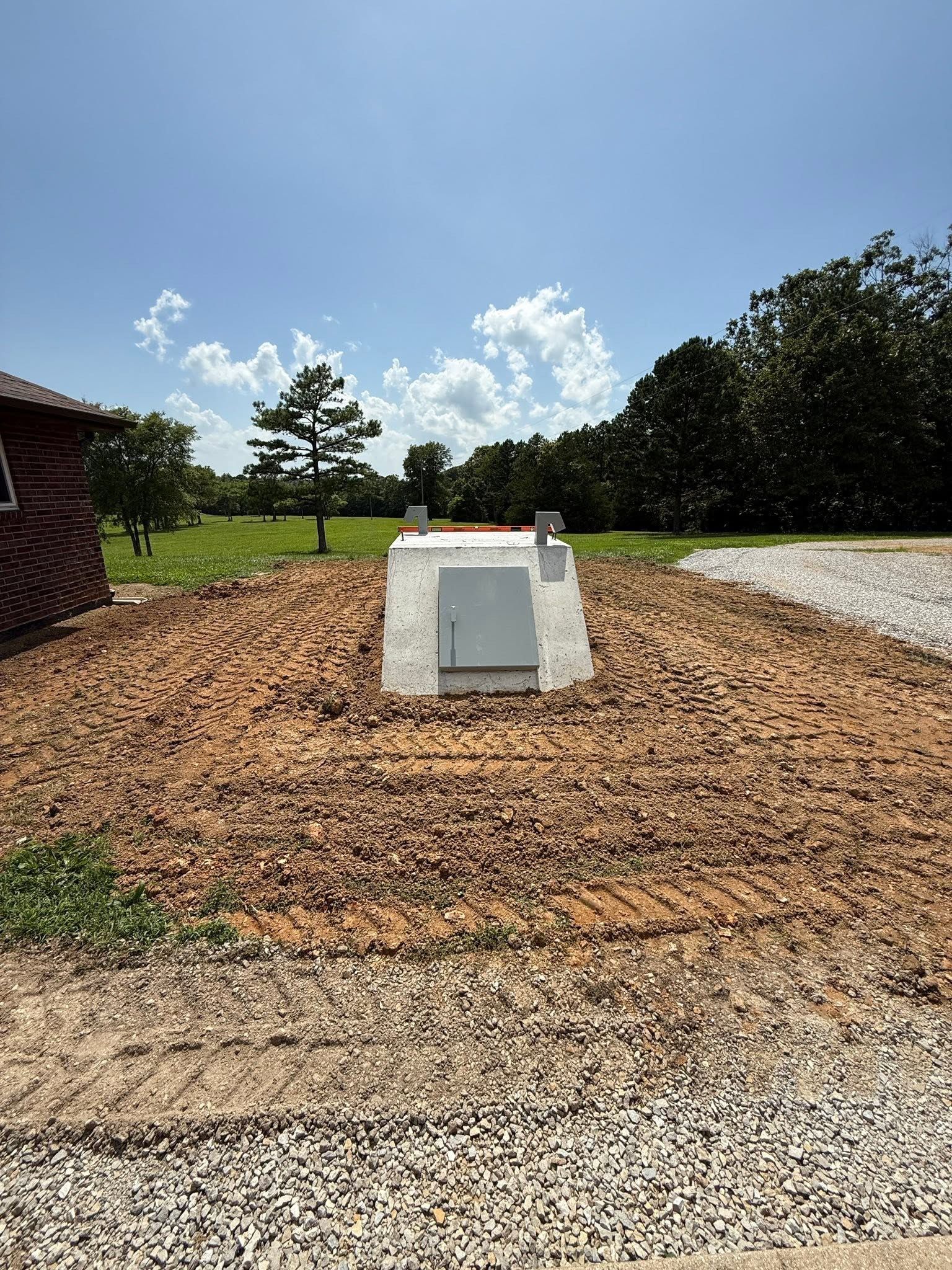
An underground shelter sits below ground level, while a partially submerged shelter extends above the surrounding grade.
Both require appropriate site conditions, drainage considerations, and installation planning.
The entrance configuration can also affect usability. Depending on the model, entry may involve steps, a particular door arrangement, or other access considerations.
For households with mobility limitations, these details should be discussed before selecting a shelter.
Neither design should be considered universally safer simply because of how far it sits underground. The specific shelter design, installation, site conditions, and accessibility all matter.
Moore Septic Services installs SI Precast concrete storm shelters, including underground and partially submerged options. Learn more about its concrete storm shelter installation services.
What Happens During a Storm Shelter Site Evaluation?
A site evaluation helps determine whether your preferred location is practical and what conditions could affect installation.
Moore Septic Services evaluates factors such as soil conditions, proposed placement, and available space.
Depending on the property, the evaluation may help identify whether:
- The preferred location appears feasible.
- Another location may offer better access or installation conditions.
- Additional excavation or site preparation could be necessary.
- Underground infrastructure needs further locating.
- Permitting or additional technical review is required.
If your first choice isn't suitable, an alternative location or shelter configuration may be worth considering. Some property limitations, however, cannot be resolved through ordinary site preparation.
What Should You Have Ready Before the Evaluation?
It helps to identify one or two possible locations, note where water collects after heavy rain, and gather any available septic-system drawings or utility information.
Also consider who will use the shelter, how they'll reach it, and whether fences, landscaping, or narrow access points could interfere with installation equipment.
You don't need to determine the final placement yourself. The purpose of the evaluation is to identify potential problems before work begins.
Frequently Asked Questions
Can a Storm Shelter Be Installed Beside a Driveway or Garage?
Possibly. The location must be evaluated for nearby foundations, buried utilities, drainage, equipment access, and the shelter's installation requirements. Available space beside a structure doesn't automatically mean the location is suitable.
What Happens if My Preferred Storm Shelter Location Isn't Suitable?
Another location, a different shelter configuration, or additional site preparation may be considered. The available options depend on the property and the shelter's requirements. Some locations may need to be ruled out.
Do You Need a Permit to Install a Storm Shelter in Missouri?
Permit requirements depend on the property's jurisdiction and applicable regulations. Contact the local building authority and installer before beginning work rather than assuming the same rules apply statewide.
How Much Space Do You Need for a Concrete Storm Shelter?
The required space depends on the shelter model and installation method. Beyond the shelter footprint, room may be needed for excavation, equipment access, and required clearances. The installer should confirm these requirements for the proposed location.
Not Sure Where a Storm Shelter Should Go on Your Property?
You may have a location in mind, but drainage, underground utilities, septic components, and equipment access can affect whether it will work.
Moore Septic Services provides site evaluation, excavation, and concrete storm shelter installation throughout Southern Missouri, including the Springfield area.
Contact Moore Septic Services to discuss your property and potential installation locations before making a final decision.