Can You Build, Drive, or Plant Over a Septic System? What Property Owners in Lebanon, MO Should Know
Your septic system is more than the tank buried in your yard. The drain field, wastewater lines, soil, and surrounding area all play a role in keeping the system working properly. That means the way you use the property above and around your septic system matters.
Moore Septic Services understands that connection because septic systems are what we do every day. From septic pumping, locating, repair, and replacement to sewer and drain services, camera inspections, excavation, and tree removal near septic systems, Moore Septic Services works with the septic system as part of the entire property—not as an isolated tank underground.
That experience matters when you're planning a driveway, building a shed, clearing trees, parking an RV, using heavy equipment, or simply trying to figure out where your septic system is located. For rural homeowners in Manes, Mountain Grove, Halltown, and throughout Southern Missouri, knowing what can safely go over, around, or near the system can help prevent damage and costly repairs.
In this guide, we'll answer the practical questions Southern Missouri property owners commonly have about driving, building, planting, excavating, and landscaping around a septic system—and explain what to consider before making changes to your property.
Can You Drive Over a Septic Tank or Drain Field?
You should generally avoid driving vehicles or heavy equipment over a septic drain field. Repeated traffic can compact the soil and potentially damage septic components beneath the surface.
A drain field depends on the surrounding soil to absorb and treat wastewater. Compacted soil can interfere with that process.
This applies to:
- Cars and trucks
- RVs and trailers
- Tractors
- Construction equipment
- Other heavy vehicles
Parking an RV over a drain field may seem harmless if the area is not being used, but the weight can still compact the soil.
Missouri University Extension recommends keeping vehicles off drain fields and avoiding paving, construction, swimming pools, and other heavy objects over the area.
If you're experiencing slow drains, odors, standing water, or other problems, Moore Septic Services can provide septic pumping and locating services.
Can You Build a Structure or Driveway Over a Septic System?
You should not build a shed, garage, addition, or other permanent structure over a septic drain field. You should also avoid placing a typical driveway over the drain field.
Construction and vehicle traffic can compact the soil, damage underground components, interfere with wastewater treatment, and make future maintenance more difficult.
The septic tank itself also needs to remain accessible for inspection and pumping.
Before building a:
- Shed or workshop
- Garage
- Addition
- Deck or patio
- Swimming pool
- Driveway
- Other permanent structure
first determine where the septic tank, drain field, and wastewater lines are located.
This is particularly important when making improvements to rural property around Springfield, Lebanon, or Rolla. A driveway or building location should be planned around the septic system rather than discovering the conflict after construction begins.
Can You Plant Trees Near a Septic Tank or Drain Field?
Trees and other deep-rooted plants should be used carefully around septic systems because roots can damage underground pipes and other components.
Try to avoid water-loving trees and shrubs with deep roots around drain fields. Grass is generally a better choice for covering the area.
Think about a plant's mature root system, not just the size of the plant when you put it in the ground.
Tree roots can enter damaged or leaking sewer lines and create:
- Blockages
- Slow drains
- Backups
- Pipe damage
- Repeated sewer problems
Moore Septic Services offers tree removal near septic systems and sewer and drain cleaning for problems such as tree-root intrusion.
If a tree is already growing close to a septic tank, drain field, or sewer line, removing the tree may not be the entire solution. The affected line or component may also need to be inspected.
Can Heavy Equipment Damage a Septic System?
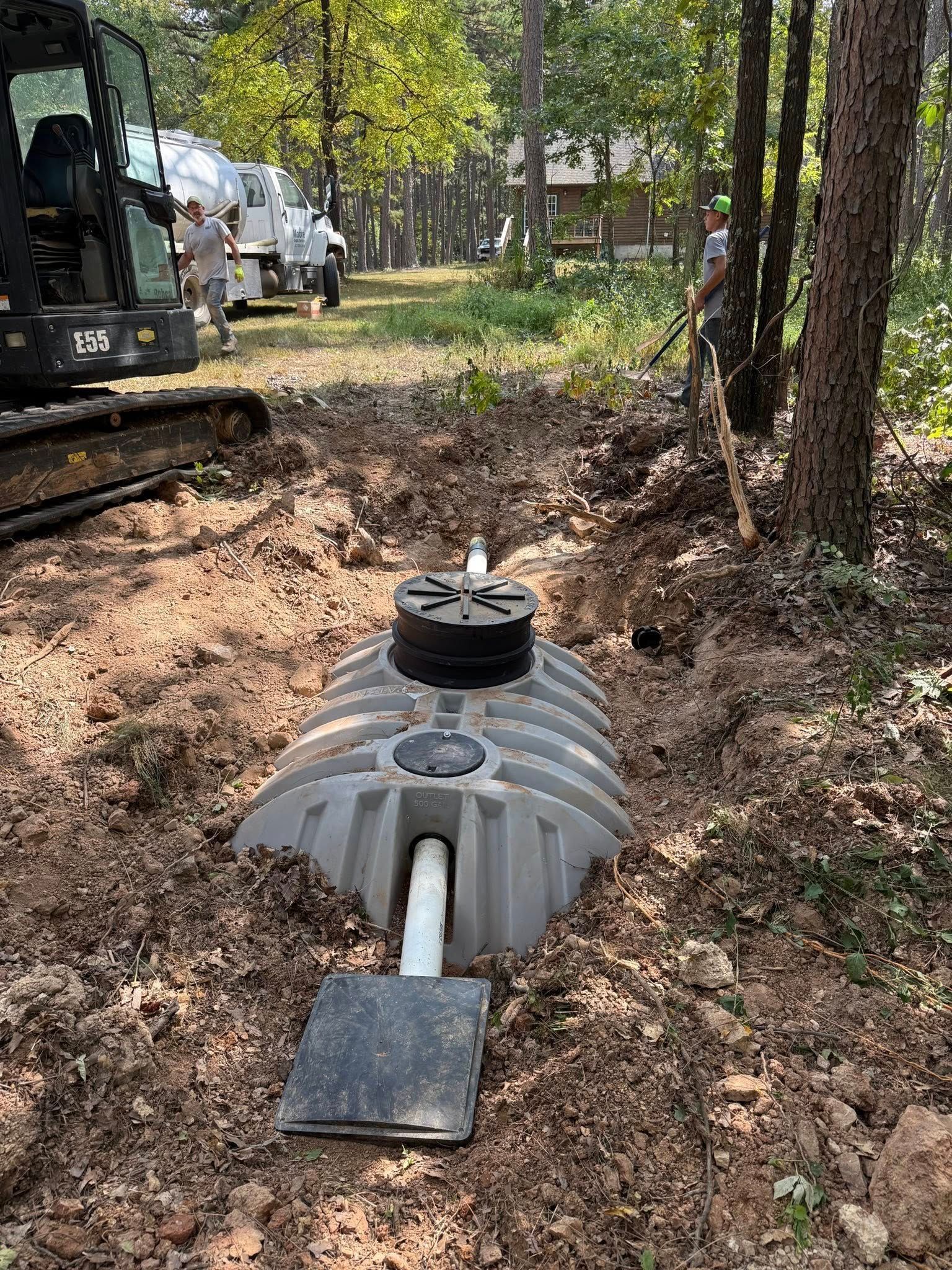
Yes. Excavators, dozers, skid steers, trucks, and other heavy equipment can damage septic tanks, pipes, or drain fields if operated over the wrong area.
This matters during:
- Excavation
- Land clearing
- Grading
- Driveway construction
- Utility installation
- Tree removal
- New construction
Before equipment arrives, identify the septic tank, drain field, and underground lines.
Moore Septic Services provides both septic services and excavation, including mini excavator and dozer work, utility trenching, land clearing, grading, and property cleanup. When a property project involves both septic and excavation work, those two needs can be considered together.
What Should You Do Before Excavating Near a Septic System?
Locate the septic tank, drain field, and underground wastewater lines before you dig.
Before starting an excavation or construction project:
- Check septic permits and property records.
- Look for previous inspection or installation documents.
- Ask the previous property owner if information is available.
- Identify the tank and drain field.
- Mark the system before equipment arrives.
- Keep heavy equipment off the drain field.
- Make sure anyone performing excavation knows where the system is located.
This matters for both small projects and major property improvements. Even digging for fence posts can be a problem if you don't know where wastewater lines are located.
If you're planning excavation, grading, tree removal, or construction and don't know where the septic system is, find it before you start digging.
What If You Don't Know Where Your Septic Tank or Drain Field Is?
Don't guess. Locate the system before beginning construction, landscaping, excavation, or other major property work.
Start by checking septic permits, property records, inspection documents, or information from the previous owner.
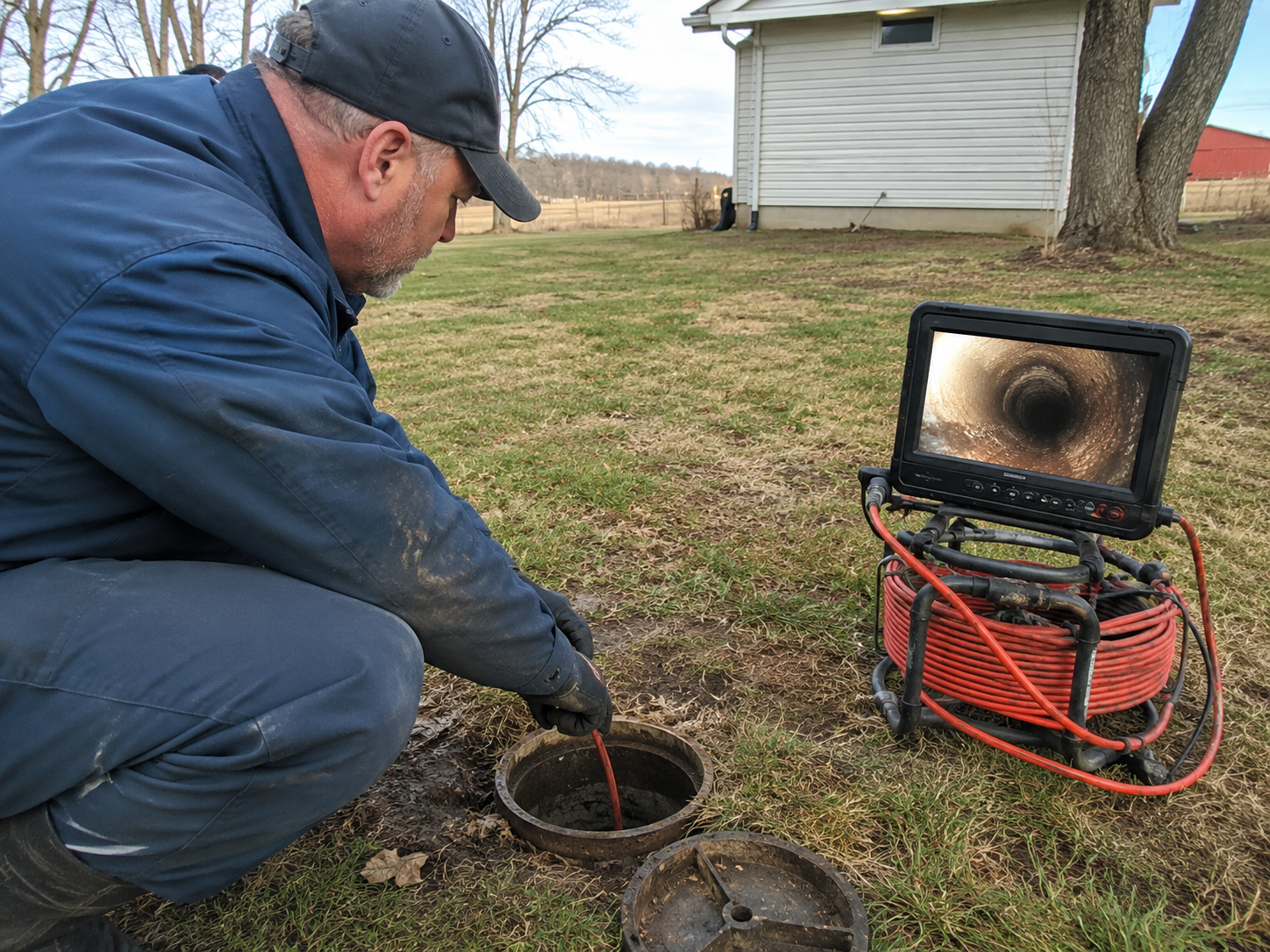
If those records aren't available, Moore Septic Services offers septic tank locating and septic and sewer camera inspections that can help investigate underground components.
Knowing the location of your septic system is useful beyond your current project. Keeping that information documented can make future pumping, inspections, repairs, property improvements, and property transfers easier.
What Happens If You Damage Your Septic System?
Stop the activity and have the system evaluated if you believe construction, driving, excavation, or landscaping has damaged a septic component.
Some damage is immediately obvious, while other problems may not appear until later.
Watch for:
- Slow drains
- Gurgling plumbing
- Sewage odors
- Standing or soggy areas
- Sewage surfacing
- Repeated backups
If you notice these symptoms, learn what to do when your septic system backs up in the yard rather than digging into the system yourself.
Depending on the problem, Moore Septic Services can provide pumping, inspection, repair, replacement, or other septic services.
How Moore Septic Services Can Help
Moore Septic Services works with rural homeowners and businesses in Mountain Grove, West Plains, Marshfield, and throughout Southern Missouri, where septic systems are essential for properties outside municipal sewer service.
We provide:
- Septic tank pumping
- Septic tank locating
- Septic tank repair and replacement
- Septic and sewer camera inspections
- Sewer and drain cleaning
- Tree removal near septic systems
- Excavation and land clearing
- New septic system installation
- Emergency septic services
That range of services is particularly useful when a septic question is connected to a larger property project.
For example, a homeowner may need to remove trees before construction, install a driveway, clear land, or excavate for utilities. In each situation, knowing where the septic system is located and protecting its components should be part of the plan.
Moore Septic Services has a background in regenerative agriculture and focuses on working with the property's natural conditions rather than treating every septic project as identical.
FAQs About Building, Driving, and Landscaping Around Septic Systems
Can I Drive My Car Over My Septic Tank?
It is best to avoid unnecessary vehicle traffic over septic components, particularly the drain field. Repeated or heavy traffic can compact soil and potentially damage the system.
Can I Park My RV Over My Drain Field?
No. An RV can place substantial weight on the drain field and compact the soil. Choose a parking area away from the drain field.
Can I Build a Shed on My Property in Manes, MO Over My Septic Tank?
You should not build over the drain field, and structures around the tank can interfere with access for pumping and maintenance. Plan structures around the septic system instead.
Can I Put a Driveway to My Property in West Plains, MO Over My Drain Field?
A typical drain field should not be used as a driveway because regular vehicle traffic can compact the soil and damage underground components.
Can I Plant Trees Over My Drain Field?
Deep-rooted trees should generally be avoided around septic systems. Grass is usually a better drain field cover.
Can Tree Roots Damage Septic Lines?
Yes. Roots can enter damaged or leaking sewer lines and cause blockages, backups, and pipe damage.
What If I Don't Know Where My Septic Tank Is?
Check your septic records, permits, inspection documents, or information from the previous owner. If the location still isn't clear, professional septic locating can help before you begin digging.
How Often Should I Pump My Septic Tank?
Routine pumping helps prevent solids from building up and reaching the drain field. Learn more about how often you should pump your septic tank.
Planning Work Around Your Septic System?
Your septic system should be considered before you build, drive, plant, dig, or make major changes to your property.
Knowing where the tank and drain field are located can help you avoid compacting the soil, damaging underground lines, creating root problems, or making future septic maintenance more difficult.
Moore Septic Services serves rural properties throughout Southern Missouri, including communities such as Lebanon, Mansfield, and West Plains, as well as surrounding areas.
If you're planning a property improvement and aren't sure whether your septic system could be affected, it's better to ask before the equipment arrives or the digging begins.
Contact Moore Septic Services to discuss your septic system or upcoming property project.