Septic Inspection Before Buying a Home in Missouri: What Every Rural Property Buyer Should Know
Buying a home in rural Missouri comes with responsibilities that many buyers have never encountered before, especially if they are moving from a property connected to city sewer. One of the biggest and most expensive risks is the septic system.
At Moore Septic Services, septic inspections and real estate-related septic concerns are not new to us. In fact, our company recognized a need for septic services through our involvement in real estate transactions and rural property ownership. We've seen buyers discover failing drain fields, neglected septic tanks, missing maintenance records, and costly system issues that would have gone unnoticed without a proper inspection.
Whether you're purchasing a home near Houston, a small acreage outside Mountain Grove, or a rural property near Fort Leonard Wood, understanding the condition of the septic system before closing is critical.
A septic system is one of the few major components of a property that is largely hidden underground. A home can look move-in ready while the septic system underneath is nearing failure. That's why we strongly recommend a professional septic inspection before purchasing any rural property in Missouri.
Over the years, we've worked with homeowners, buyers, sellers, and real estate professionals throughout rural Missouri who simply wanted to know exactly what they were purchasing before closing. In many cases, a septic inspection confirmed the system was functioning properly and gave buyers peace of mind. In others, the inspection uncovered issues that allowed repairs to be negotiated before ownership changed hands.
In this guide, we'll explain what a septic inspection includes, common problems found during real estate transactions, Missouri-specific concerns buyers should understand, and the steps you can take to protect yourself before closing.
Do You Need a Septic Inspection Before Buying a House?
The short answer is yes.
If a property has a septic system, a professional septic inspection is one of the most important inspections you can schedule before closing.
Is a Septic Inspection Worth It?
Yes.
For most rural Missouri homebuyers, a septic inspection can uncover expensive problems before closing and provide leverage for negotiating repairs or credits with the seller. Compared to the cost of major septic repairs or replacement, the investment in an inspection is relatively small and can help buyers avoid significant financial surprises.
Many buyers assume their general home inspection covers everything. In reality, most home inspectors only perform a limited visual assessment of the septic system. They typically do not uncover lids, inspect internal tank components, evaluate sludge levels, or assess the overall condition of the drain field.
As we've worked with property buyers throughout the Houston, Mountain Grove, and Fort Leonard Wood areas, we've seen many situations where buyers assumed the home inspection covered the septic system. Unfortunately, they later learned the septic tank, drain field, and underground components were never thoroughly evaluated.
Why a Home Inspection Is Not Enough
A traditional home inspection focuses primarily on the structure and major systems within the home. Since most septic components are underground, many potential issues remain hidden without specialized equipment and septic expertise.
| Standard Home Inspection | Professional Septic Inspection |
|---|---|
| Visual review of accessible systems | Evaluates septic system condition |
| Limited septic observations | Inspects tank components and functionality |
| No drain field evaluation | Evaluates drain field performance |
| Typically no camera diagnostics | Can include sewer camera inspections |
| General property focus | Septic-specific expertise |
The Cost of Skipping a Septic Inspection
A septic system can be one of the most expensive components of a rural property to repair. Spending a little money on an inspection before closing can save thousands after closing.
What Does a Septic Inspection Actually Include?
A professional septic inspection evaluates the major components of the wastewater system and helps determine whether the system is functioning properly.
Locating and Accessing the Septic System
The inspection begins by locating the septic tank and evaluating accessibility, lid condition, and signs of structural concerns.
Inspecting the Septic Tank
The septic tank itself provides valuable information about overall system health.
A professional inspection may evaluate:
- Tank integrity
- Cracks or leaks
- Baffle condition
- Sludge and scum levels
- Signs of neglect or poor maintenance
In some situations, septic pumping may be recommended as part of the evaluation process. Routine pumping can also reveal hidden issues before they become major repairs. Homeowners who stay current with septic tank pumping often avoid many of the problems we see during property transactions.
Evaluating the Drain Field
In our experience, drain field problems are often the most expensive issues discovered during real estate transactions because many buyers don't realize there is a problem until surfacing wastewater or drainage issues become visible.
Inspectors evaluate:
- Standing water
- Wet areas in the yard
- Sewage odors
- Soil saturation
- Unusually green vegetation
- Signs of drain field failure
This is especially important with older rural properties throughout Wright County, Texas County, and Laclede County where septic systems may have decades of service history.
Checking Overall System Performance
A functional assessment helps determine how wastewater moves through the system and whether there are signs of stress, backups, or restricted flow.
Additional Testing That May Be Recommended
Depending on the property's age and history, additional testing may be recommended.
Hydraulic Load Testing
Evaluates how the system handles normal household wastewater volume.
Dye Testing
Can help identify surfacing wastewater or drain field concerns.
Camera Inspections
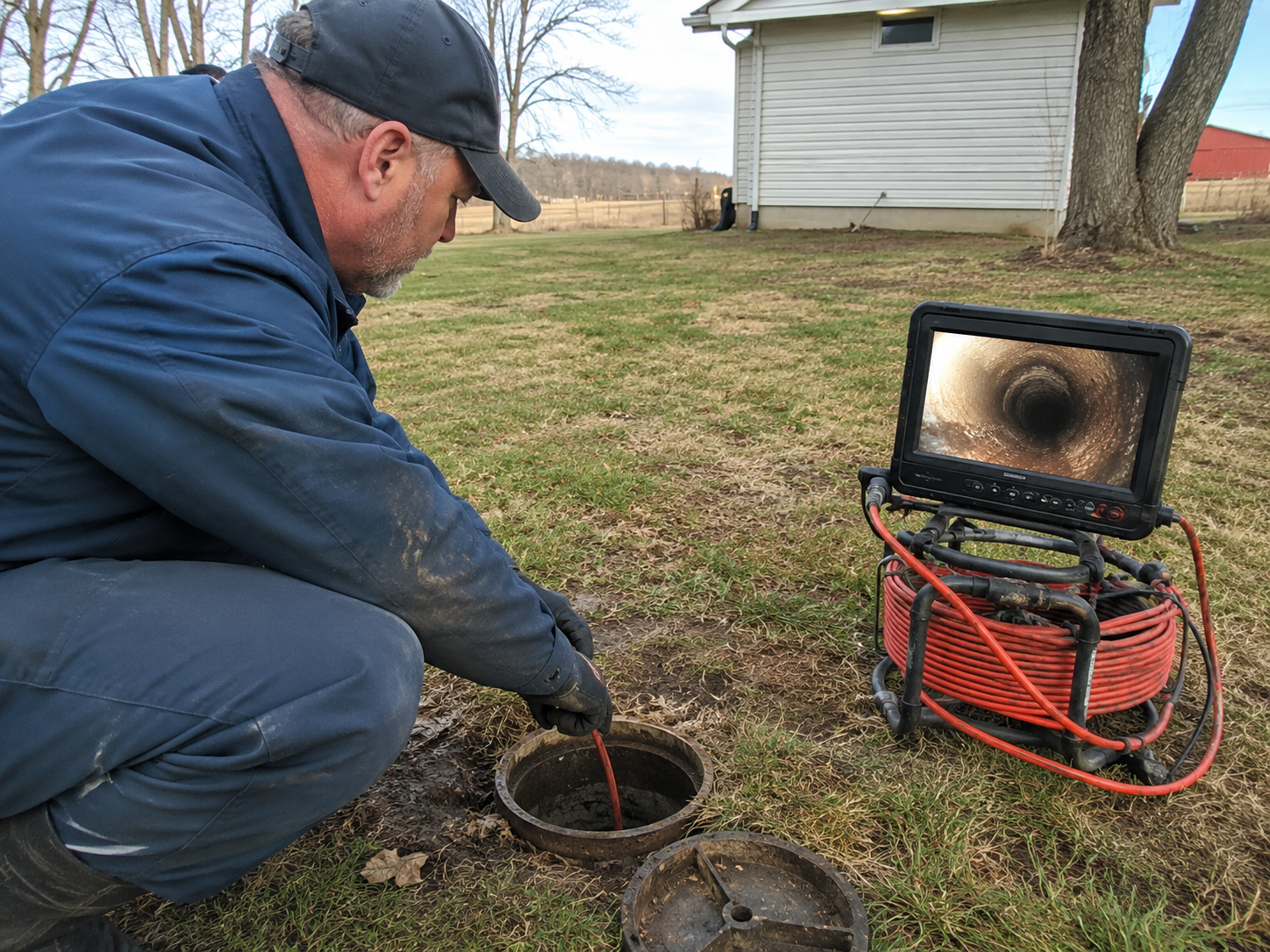
Can reveal tree root intrusion, broken lines, sagging pipes, and hidden sewer problems between the home and septic tank. A sewer camera inspection is often one of the best ways to identify issues that cannot be seen from the surface.
System Location Verification
Confirms component locations and setback requirements.
For buyers considering an older rural property, these additional evaluations can provide valuable insight into the remaining lifespan and condition of the system.
Common Septic Problems Found During Real Estate Transactions
Over the years, certain issues appear repeatedly during property sales.
Full or Neglected Septic Tanks
One of the most common findings is a septic tank that has not been pumped on a regular schedule.
Without proper maintenance, excessive solids can accumulate and eventually damage the drain field.
Drain Field Failure
Common warning signs include:
- Persistent wet spots
- Standing water
- Strong sewage odors
- Bright green grass over the drain field
- Slow drains throughout the home
Drain field replacement can become a significant expense, making early identification critical.
Damaged Baffles and Internal Components
Baffles help direct wastewater flow and prevent solids from entering the drain field.
When baffles fail, the entire septic system can suffer. In many cases, we've found that catching these issues early can help property owners avoid much larger septic repair expenses later.
Tree Root Intrusion
Tree roots naturally seek moisture and can infiltrate septic lines and components over time.
In many cases, a sewer camera inspection can identify these issues before they become a larger repair.
Improper or Outdated Repairs
Some older rural properties may contain repairs completed years ago that no longer meet current standards or best practices.
What Are the Biggest Septic Red Flags for Home Buyers?
We often encounter these warning signs during inspections around Seymour and neighboring rural communities.
Sewage Odors Around the Property
Persistent sewage smells near the tank or drain field deserve immediate investigation.
Standing Water in the Yard
Pooling water often signals drainage or absorption issues.
Slow Drains Throughout the Home
Multiple slow fixtures can indicate a larger septic problem rather than an isolated plumbing concern.
Unusually Green Grass Over One Area
Lush vegetation can be a sign that wastewater is surfacing instead of being properly absorbed underground.
Missing Maintenance Records
Missing records do not automatically indicate a problem, but they create uncertainty and justify a more thorough inspection.
How a Septic Inspection Protects Your Negotiating Power
Many buyers focus solely on whether the septic system passes or fails.
However, one of the biggest benefits of an inspection is the negotiating leverage it can provide before closing.
A professional inspection may reveal:
- Repairs that should be completed before closing
- Potential repair credits from the seller
- Deferred maintenance concerns
- Components nearing the end of their lifespan
We've seen situations where a buyer spent a few hundred dollars on a septic inspection and avoided thousands of dollars in unexpected repairs after moving into the home.
Even when issues are discovered, buyers gain valuable information that can be used during negotiations.
How Long Does a Septic System Last?
This is one of the most common questions we receive from buyers.
The answer depends on maintenance, usage, soil conditions, and installation quality.
Septic Tank Lifespan
A properly maintained septic tank can often last several decades.
Drain Field Lifespan
Drain fields can also last many years, but they are often more vulnerable to neglect, heavy traffic, poor drainage, and excessive wastewater loading.
Why Age Is Only Part of the Story
We've inspected older systems that were functioning properly because they had been maintained consistently. We've also seen newer systems develop problems due to poor maintenance habits.
Maintenance history is often more important than age alone.
If significant issues are discovered during an inspection, buyers should discuss whether septic repair or full septic system replacement may eventually be necessary.
How Much Does a Septic Inspection Cost?
The cost of a septic inspection can vary depending on the property, system accessibility, and whether additional testing is recommended.
Factors that may affect pricing include:
- The size and complexity of the system
- Whether pumping is needed
- Camera inspection requirements
- Additional testing such as dye or load testing
- Accessibility of the tank and components
While costs vary, a professional inspection is typically far less expensive than repairing a failing drain field or replacing a septic system after closing. For most buyers, the value comes from understanding potential risks before making one of the largest investments of their lives.
Questions Every Buyer Should Ask Before Closing
Before finalizing a purchase, we recommend asking these five questions.
1. When Was the Septic Tank Last Pumped?
Request maintenance receipts whenever possible.
2. Are Maintenance Records Available?
Inspection reports and service records can provide valuable insight into system care.
3. Has the System Ever Been Repaired or Replaced?
Knowing the history of major repairs can help buyers better understand future risks.
4. Are Installation Permits Available?
Permits can help verify that the system was installed appropriately for the property.
5. Where Are the Tank and Drain Field Located?
Knowing the location of key components helps prevent accidental damage in the future.
Who Pays for Septic Repairs After an Inspection?
This depends on the purchase agreement and negotiations between buyer and seller.
Seller Repairs Before Closing
In some situations, sellers agree to complete repairs before closing.
Repair Credits
Other transactions involve credits that allow buyers to complete repairs after closing.
What Inspection Findings Should Concern Buyers Most?
While every situation is unique, we recommend paying particularly close attention to:
- Drain field failures
- Structural tank damage
- Evidence of sewage surfacing
- Significant root intrusion
- Extensive deferred maintenance
These issues can significantly impact future ownership costs.
Missouri-Specific Considerations for Rural Property Buyers
Many properties throughout the Rolla and Fort Leonard Wood areas rely entirely on private wastewater systems.
Older Rural Septic Systems
Properties throughout Wright County, Texas County, Laclede County, and Pulaski County often contain older septic systems that may have decades of service history.
Many Rural Missouri Properties Depend on Both a Well and a Septic System
Many rural homes rely on both a private well and a septic system.
If a septic system is failing, groundwater quality may become a concern. Buyers should evaluate both systems together when conducting due diligence. The U.S. Environmental Protection Agency provides helpful information about how properly functioning septic systems protect groundwater quality and public health through its Septic Systems guidance.
Why Setback Distances Matter
One item often overlooked by buyers is septic system setback requirements.
These regulations help protect:
- Private wells
- Property lines
- Water quality
- Neighboring properties
As septic professionals serving rural Missouri communities, we encourage buyers to become familiar with Missouri Department of Health and Senior Services guidelines regarding onsite wastewater systems. Understanding setback requirements, maintenance responsibilities, and system regulations can help prevent costly surprises after purchasing a property. Buyers can learn more through the Missouri Department of Health and Senior Services Onsite Wastewater Program.
Seasonal Conditions Can Affect Inspections
Heavy spring rains, saturated ground conditions, and summer heat can reveal issues that may not be obvious at other times of the year.
What Should Buyers Do Before Closing on a Home With a Septic System?
Before purchasing a rural property, we recommend following this due diligence checklist:
- Request maintenance records.
- Schedule a professional septic inspection.
- Review inspection findings carefully.
- Understand future maintenance requirements.
- Evaluate both the septic system and private well if applicable.
- Discuss any concerns before closing.
A properly maintained septic system can provide reliable service for many years. Being proactive from the beginning helps protect your investment.
A Septic Inspection Is One of the Best Investments You Can Make Before Buying Rural Property
Purchasing a home is one of the largest investments most people will ever make. When that property relies on a septic system, understanding the condition of the wastewater system is just as important as evaluating the home's structure and mechanical systems.
A professional septic inspection can uncover hidden problems, provide valuable negotiating leverage, and help buyers avoid unexpected repair costs after closing.
For rural Missouri property buyers, a septic inspection is not simply another item on the checklist. It is an important step toward making a confident and informed purchase decision.
Our goal is simple: help buyers understand exactly what they are purchasing before ownership changes hands.
If you're under contract on a rural property or preparing for closing, contact Moore Septic Services before finalizing the purchase. We can help evaluate the septic system, explain inspection findings, identify potential concerns, and provide practical recommendations based on real-world experience working with Missouri septic systems.
Whether you need a septic inspection, septic pumping, sewer camera inspection, septic repair guidance, emergency septic service, or a second opinion on an inspection report, our team is here to help.
Frequently Asked Questions
Is a septic inspection required before buying a house in Missouri?
No. Missouri does not require septic inspections during every real estate transaction. However, they are strongly recommended for any property served by a septic system.
How long does a septic inspection take?
Most inspections can be completed within a few hours depending on system accessibility and complexity.
What happens if a septic system fails inspection?
The buyer and seller typically negotiate repairs, credits, or other solutions before closing.
Can a septic system pass a home inspection and still have problems?
Yes. A general home inspection often does not include a comprehensive septic evaluation.
Should I have the septic tank pumped before closing?
In some situations, pumping may be recommended as part of the inspection process. A qualified septic professional can advise based on the condition of the system.